





Consider becoming a member to support our work and attend ALL events for free. We offer membership discounts to solo parents, jobseekers, and individuals based in developing nations or struggling financially. Contact us to apply.
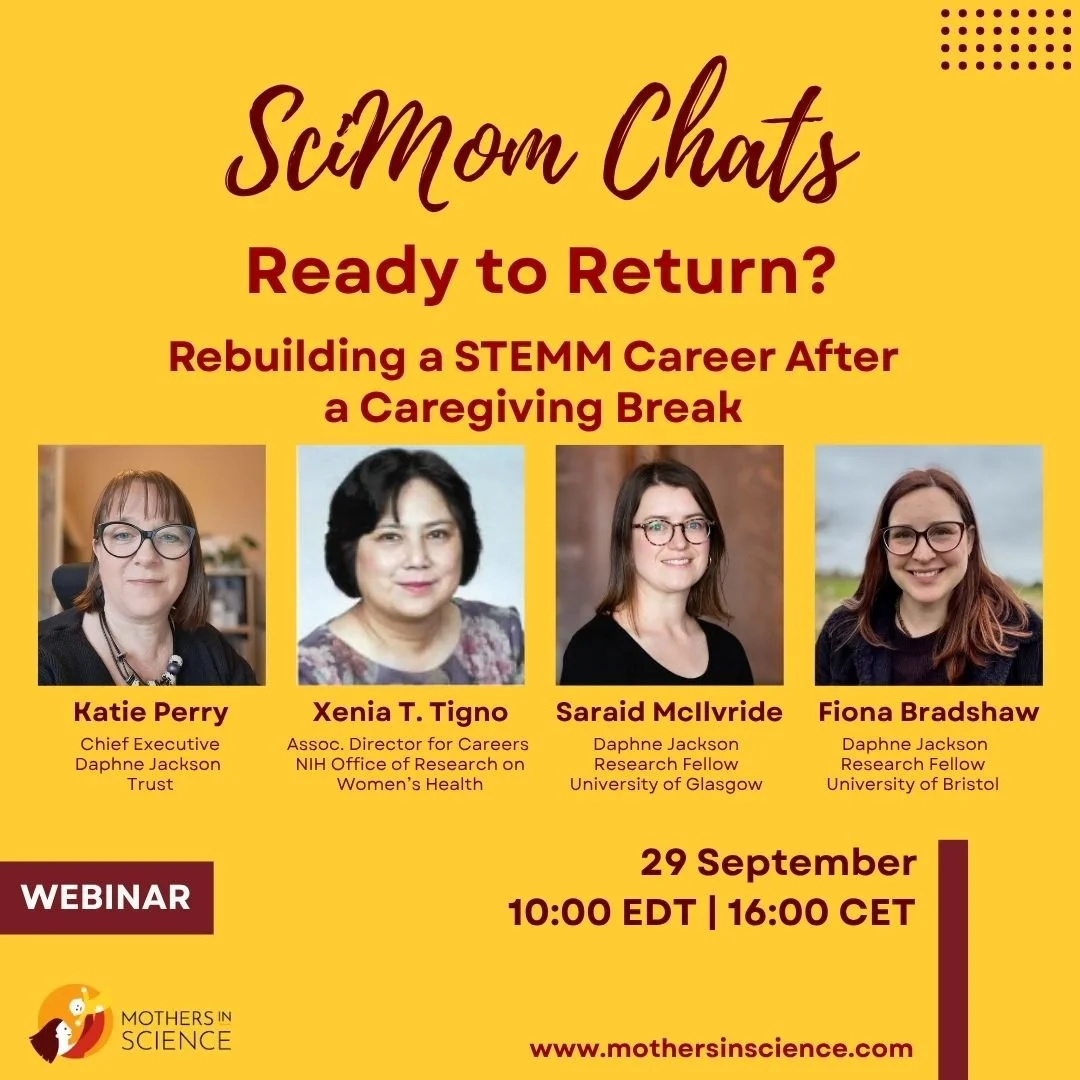
Join us for an honest conversation about the challenges of returning to work after a caregiving break, and explore practical strategies and resources to help you rebuild your STEMM career and move forward with confidence.
Returning to work after a prolonged break for caregiving can be challenging, especially in the competitive and fast-paced field of STEMM and academia. Due to unequal family policies and internalized gender norms, mothers are more likely than fathers to step away from the workforce to raise their young children, whether by choice or due to the lack of affordable childcare.
For our fall kickoff event, we’re bringing together speakers from the Daphne Jackson Trust and the National Institutes of Health, two leading organizations that offer support to mothers returning to science after a career break through funding, mentoring, and resources. We will also hear from mothers who have lived experience of reentering a STEMM career after a prolonged career break.
We will discuss the various aspects of returning to STEMM:
When is the best time to restart your career?
What are the challenges of reentry?
What are some strategies and resources that can help?
Whether you're considering a career break, currently away from work, or thinking about returning to STEMM or academia, come join the conversation!
Speakers:
Dr. Katie Perry is the Chief Executive of the Daphne Jackson Trust, the UK’s leading organization supporting STEMM career returners. She is a physicist with a background in science communication and holds a degree and PhD in Physics from the University of Surrey. In 2023, the Trust’s outstanding contribution to the culture of science and research was recognised via the Royal Society’s Research Culture Award.
Dr. Xenia T. Tigno is Associate Director for Careers at the National Institutes of Health Office of Research on Women’s Health, where she works to advance the careers of women in STEMM as well as women’s health researchers. A vascular biologist by training, she holds a PhD from the University of Würzburg, with a career spanning bench research, teaching, and writing.
Dr. Saraid McIlvride is a Daphne Jackson fellow at the University of Glasgow, using electronic health records to understand long term impacts of psychotropic medications in pregnancy She holds a PhD in Women's Health Research at King's College London. A mother of three, she has first-hand experience of navigating career breaks and is a committed advocate for research returners.
Dr. Fiona Bradshaw is a post-doctoral researcher in Archaeological Science and Daphne Jackson Fellow at the University of Bristol. She specialises in using analytical chemistry for investigating the past use and cultural significance of plant resins. She returned to academia after a 6-year career break, bringing up two children.
You can read a detailed summary of each event below. Click to learn more!