
Franca Schmid
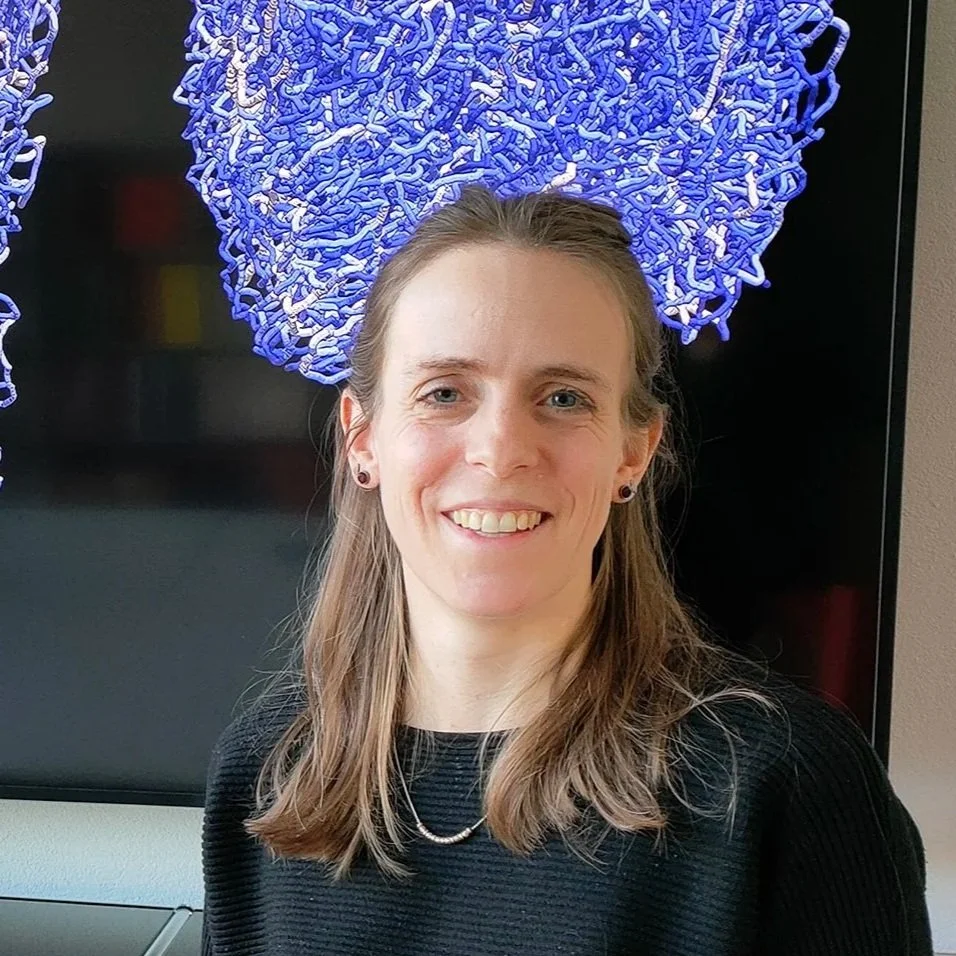
Franca Schmid is a neuroscientist and Principal Investigator at the University of Bern (Switzerland). Her research group studies the how brain blood vessels influence common neurological disorders such as stroke and dementia. In an interview with our team, she shares her scientific accomplishments and discusses the challenges of balancing motherhood and an academic career. Her goal is to create a research culture which supports diverse career paths and makes scientific excellence possible for parents and caregivers.
1. Please describe your job in one sentence.
I lead a small research group that develops computational models to study how blood flow and energy supply support healthy brain function.
2. What do you aspire to accomplish in your career and why?
Scientifically, my goal is to help establish computational modelling as a widely recognized and trusted tool in biomedical research. I am convinced that combining advanced biomedical imaging with sophisticated computational approaches offers tremendous opportunities and can lead to major advances in our understanding of biological systems. Working at this interface and knowing that it can ultimately contribute to better diagnosis and treatment, excites me over and over again.
Beyond science, I am committed to creating a working environment that is supportive and stimulating for my students and team members. Seeing them grow and enjoy research is one of the most rewarding aspects of my work. While I am happy if some choose to remain in academia, what matters most to me is that they look back on their time in research as a valuable and empowering experience that helps them move forward with confidence in their careers.
As a mother in science, I also hope to encourage women and parents to stay and lead in research. I want to contribute to a research culture in which diverse career paths and family models are compatible with scientific excellence.
3. What do you consider to be your most important career achievement or milestone?
My most important career achievement has been receiving a career grant from the Swiss National Science Foundation, which enabled me to establish my own research group at the University of Bern. I started this position directly after maternity leave following the birth of my first son. This transition was both exciting and demanding. My available working time was reduced due to caregiving responsibilities, while at the same time I was responsible for supervising two first-year PhD students and building both a cohesive team and a sustainable research program.
Four years later, I am proud of how my group has developed. What began as a challenging balancing act has evolved into a stimulating and productive research environment.
4. What career obstacles have you faced as a mother in STEMM? How did you overcome them?
For me, the biggest obstacle was (and to some degree still is) the reduced ability to travel and attend networking events due to care responsibilities for my sons. While I occasionally brought my children and partner to conferences, I still had to decline some invitations to speak at international meetings, and my networking opportunities were inevitably more limited. Both visibility and networking are crucial for establishing oneself as an independent researcher and remaining competitive in academia.
This is a challenge that cannot be fully eliminated, but I learned that even selective but consistent participation helps maintain visibility and professional connections. Attending conferences with a baby was not always easy, but for me it was the better option than stepping back entirely. Whenever possible, I asked whether remote contributions were feasible, whether similar opportunities might arise in the future, or whether one of my students could present our work in my place. Overall, I found a balance that worked for me and that allowed me to remain scientifically present while honoring my family responsibilities. Importantly, this would not have been possible without a supportive partner who could occasionally accompany, which is a reminder of how valuable shared responsibility is for enabling academic careers.
5. What was the best professional or personal advice you’ve ever received?
For me, there was no single piece of advice that decisively shaped my career. Instead, what made a real difference was participating in the COMET Program for postdocs at the University of Bern. Through this program, I discovered the value of one-to-one coaching and mentoring. Both were instrumental in helping me grow into a group leader and approach my next career steps more strategically.
I also came to truly appreciate the benefits of peer exchange and openly sharing experiences. Being aware of the impact of mentoring, coaching, and peer support, I continue to actively dedicate time to all three. I highly value these opportunities, because each encounter brings new perspectives and insights that continue to shape my development.
6. How did MiS help you professionally and/or personally?
After experiencing the benefits of mentoring in the COMET program, I joined the MiS program in 2025. The mentorship has been (and continues to be) a safe and trusted space to share personal worries and challenges. Even though not every issue can be solved, simply acknowledging that balancing motherhood and science can be demanding has strengthened my confidence in navigating both roles. I also received valuable advice on strategic aspects of establishing myself in my field. Although I have not yet been able to attend the MiS workshops or SciMom Chats due to scheduling conflicts, the topics are highly relevant to me, and I very much look forward to participating soon.
7. What advice would you give to a mother in STEMM?
The three key pieces of advice I would share are:
1) Build your network early and intentionally: Create connections broadly and take opportunities to present your research and make your work visible. Being present matters and is essential for long-term opportunities.
2) Invest in mentoring and coaching: At times, dedicating time to mentoring or coaching can feel like an additional burden, especially when research demands are high. However, these moments of reflection and exchange are powerful opportunities to reassess priorities and grow. Even if it seems like it slows short-term research progress, I am convinced that in the long run it is always worth it.
3) Know what you need for your well-being: Only when you feel well can you be a good mother, leader, and scientist. Balancing these roles is a constant juggle, and there will be phases when one aspect takes a temporary back seat. What matters is consciously returning to a phase that feels balanced and sustainable.
And finally: don’t give up if you enjoy what you are doing. We need more role models and more collective momentum to shape academia into a space that works for all of us.
Personal webpage: https://franca-schmid.com/