Refia Atik
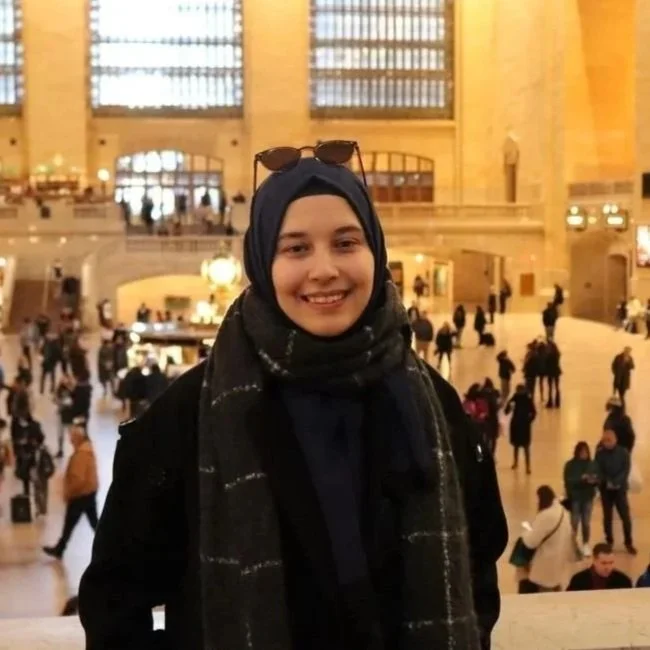
Refia Atik is a PhD candidate in Chemistry at the University of Houston (USA) and a mother of one. Her research focuses on designing nanoparticles for drug delivery and biomedical applications. In this interview, she shares the challenges she encountered as a student parent and her passion for leadership, mentorship, and community impact. Read the full interview below.
1. Please describe your job in one sentence.
I am a PhD candidate in Chemistry specializing in the design and characterization of polymer-coated nanoparticles for drug delivery and biomedical applications.
2. What do you aspire to accomplish in your career and why?
I aspire to build a career that allows me to combine my background in science with my passion for leadership, mentorship, and community impact.
Through my own journey in graduate research, I have seen how powerful guidance, clear communication, and supportive environments can be in helping people succeed, especially in demanding academic and professional settings. I hope to contribute to work that makes knowledge more accessible and useful, whether through education, program development, or collaborative initiatives that connect research with real-world needs.
Supporting and mentoring women and underrepresented individuals is particularly important to me, as I understand firsthand the challenges of balancing high expectations, responsibility, and personal commitments. Ultimately, my goal is to help create spaces where people feel supported, confident, and empowered to reach their potential, while contributing to positive and lasting change.
3. What do you consider to be your most important career achievement or milestone?
One of the most meaningful milestones in my career has been realizing that my scientific training can contribute to real advances in health and well-being.
During my PhD, working on research with translational relevance helped me see how discoveries made in the lab can eventually inform therapies across medical and biological systems. This shifted my perspective from viewing research as a purely academic pursuit to seeing it as work with long-term practical impact. Knowing that my skills may one day support better treatments and outcomes across different areas of healthcare has been central in shaping my goals and sense of purpose as a scientist.
4. What career obstacles have you faced as a mother in STEMM? How did you overcome them?
During my PhD, I took a short leave during my late pregnancy and returned to research when my daughter was three months old. At that stage, balancing early motherhood with academic responsibilities involved significant physical and emotional adjustment, including physical recovery, managing breastfeeding and pumping while on campus, and returning to a demanding research workload. Re-engaging with experiments, deadlines, and expectations during this period required careful navigation, particularly while adapting to reduced flexibility and increased fatigue.
Despite these challenges, I remained committed to my research by prioritizing tasks, working efficiently, and gradually rebuilding momentum. Throughout this period, I benefited from an understanding and supportive advisor, which allowed me to navigate this transition while continuing to make progress in my work. This experience required resilience, adaptability, and strong self-management skills, and it ultimately shaped how I approach responsibility, time management, and long-term career sustainability. I was also fortunate to have a supportive husband, whose encouragement made a tremendous difference. Open communication between partners is essential, and having space to share the challenges and expectations that come with new parenthood is critical in receiving the support needed to balance family and career.
5. What was the best professional or personal advice you’ve ever received?
The best advice I have ever received was to focus on progress rather than perfection and to trust that everyone has their own life path and timeline for reaching success. Hearing this helped me release the pressure of constant comparison and reminded me that growth does not need to look the same for everyone. This perspective became especially meaningful during demanding periods of my career and major life transitions, when balancing multiple responsibilities required patience and self-compassion. It has shaped how I approach my work and challenges with greater resilience and empathy, and it has also influenced how I support and encourage others, recognizing that each person’s journey is unique and worthy of respect.
6. How did MiS help you professionally and/or personally?
Mothers in Science has been an important source of connection and reassurance for me, both professionally and personally. Being part of a community of scientists who share similar experiences helps me feel less isolated during challenging periods of balancing research, motherhood, and recovery. Professionally, it offers a space where my experiences as a mother were understood and normalized, which strengthened my confidence and sense of belonging in STEMM. Personally, it provides encouragement, perspective, and the reminder that it is possible to pursue ambitious goals while navigating parenthood, which has been deeply motivating and empowering.
7. What advice would you give to a mother in STEMM?
I would encourage other mothers in STEMM to give themselves grace and to recognize that progress does not need to be linear to be meaningful. Becoming a mother is, in itself, one of the greatest achievements in life, and it brings perspective, strength, and resilience that extend far beyond the laboratory or workplace. Early parenthood can change how time, energy, and focus are distributed, and that adjustment does not reflect a lack of dedication or ability.
Instagram account: @refiatgrk https://www.instagram.com/refiatgrk/
LinkedIn: http://www.linkedin.com/in/refia-atik