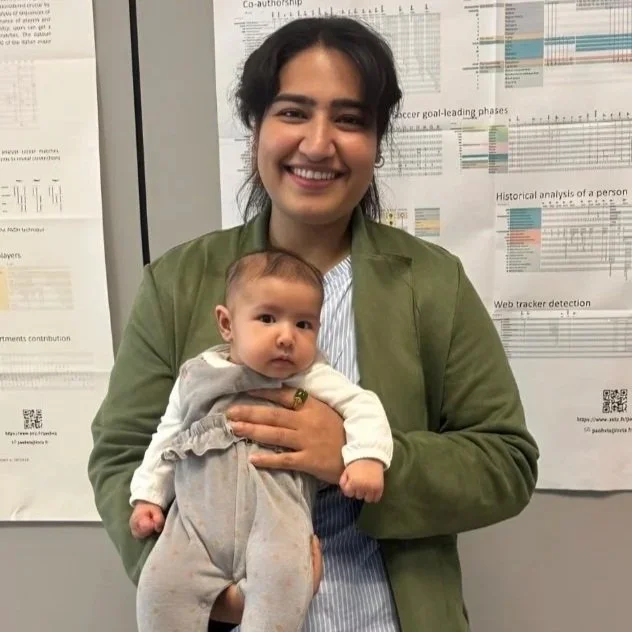
Sabina Akram
BIO
PhD candidate in human-centered artificial intelligence at the University of Bari Aldo Moro, Italy. Mother of one daughter.
“Like many mothers in science, I’ve felt the weight of the ticking clock, both career-wise and biologically.”
I am a Computer Science researcher specialising in Human-Centered Artificial Intelligence. I became a mother for the first time during the final stage of my PhD. I continued working throughout the pregnancy, aiming to submit my thesis before giving birth so I could focus fully on my newborn without academic pressure hanging over me. This was not my first pregnancy.
I experienced two miscarriages earlier, both during periods of intense academic travel, conferences, research visits, and summer schools. These periods were essential for building knowledge and networks, but came with physical and emotional strain.
Despite the setbacks, I remained committed to my academic path, often working through personal challenges while meeting professional expectations. When I became pregnant again, I knew I had to be more intentional with my time and energy.
The pregnancy came with complications: gestational diabetes, physical pain, and ongoing fatigue, but I remained focused on completing my thesis. I worked around medical appointments, managed deadlines, and kept my pace steady.
Having a partner in the same field made a big difference. My husband is also a telecommunications researcher and understood the nature of my work. He supported me in practical, consistent ways, from reviewing paper drafts to managing household routines, we didn’t miss a single doctor’s appointment or academic deadline. That shared responsibility helped make the process more manageable, and we handled every phase as a team.
I was also fortunate to have supportive academic relationships during this time. As someone pursuing a PhD outside my home country and away from family, navigating pregnancy came with added emotional and logistical challenges.
My advisor responded with genuine encouragement when I shared the news, and my colleagues and collaborators remained respectful and flexible. That support, especially in an international setting, made a real difference in helping me manage both my academic responsibilities and personal wellbeing during a demanding period.
After the birth of my daughter, I shifted to become a full-time caregiver. While the pressure of completing a PhD eased, a different kind of pressure began to build: how and when to return to work, how to stay professionally active, and how to balance long-term career goals with the daily demands of caring for an infant.
I often worry about missing out on job openings, falling behind on new research developments, or losing momentum in my field. Like many mothers in science, I’ve felt the weight of the ticking clock, both career-wise and biologically, and I’m still figuring out how to move forward in a way that’s sustainable.
For now, I’m taking things step by step. Staying in science while raising a child requires constant adjustment, but I continue to find ways to stay connected, plan ahead, and make space for both roles in a realistic way.