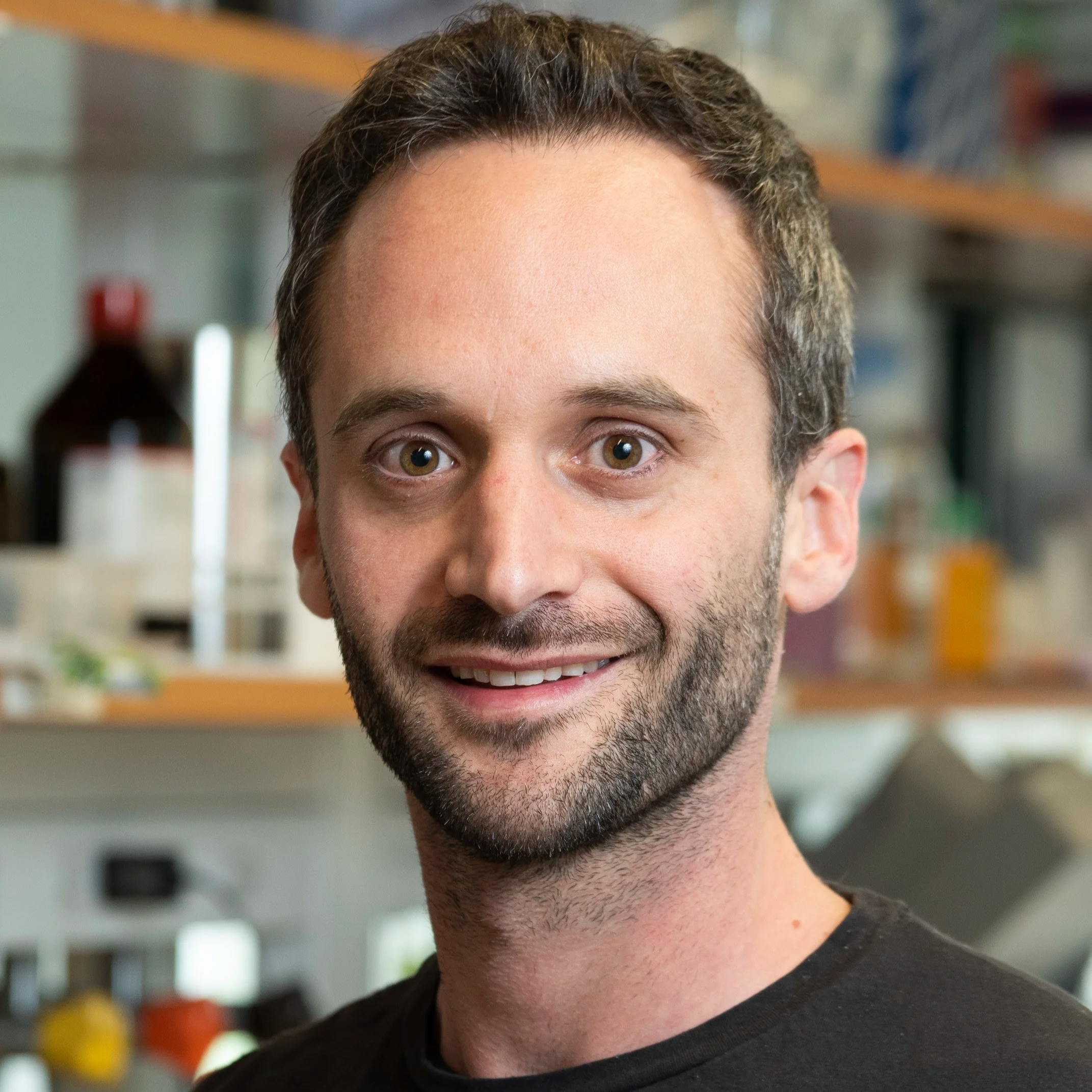
Simon Van Herck
BIO
Assistant professor in regenerative medicine at Maastricht University. Father of one boy.
“There is no acknowledgment that fatherhood, too, is transformative.”
After a postdoc full of international moves—Switzerland, Belgium, the US—I landed a position as a group leader in Maastricht. Around the same time, my wife took a leap and switched fields to pursue a PhD in ecology. We moved back to Europe, with two new career paths in motion and a baby on the way.
We thought we had a plan. But not long after, my wife’s PhD promoter withdrew support for her fellowship application. The message was loud and clear: “You won’t be able to handle it as a young mother.” Instead of support, she got sidelined. She’s now home full-time, forced to rethink her path while caring for our son.
We hadn’t prepared to fall back on a single income, and I’ve caught myself too often wondering if I should just transition into industry—for the salary, the stability. Strangely, there’s a silver lining. She’s finding joy in the long, intense hours with our son. That time is real and meaningful. And while I wish she had the choice, I’m grateful she’s enjoying every minute.
And as always, there’s a stark difference between mothers and fathers. Whilst our partners go through the raw, miraculous, and difficult experience of childbirth; we want to be there for them in the postpartum period—to support them as they heal and to bond with our newborns in those first fragile weeks. But we’re pulled back to work almost immediately. There’s no buffer, no pause.
While mothers rightly receive substantial extensions in fellowship eligibility, this is still very restrictive for fathers. No acknowledgment that fatherhood, too, is transformative. And yet, for me, fatherhood has been nothing short of transformative. I have dreamed about being a father for a long time. I was ready to slow down, to shift gears, to be present. But starting a research group leaves very little room to breathe—let alone to parent. The lab needs attention, the grants are calling, the teaching won’t schedule itself. Still, like every parent, we adapt.
I’m lucky to have some autonomy in academia. It lets me bend my schedule enough to hear him laugh every morning, to hold him for a while before dinner, to catch glimpses of this fast-moving phase. Every hour I spend with my son feels like a gift—and a risk. A moment of connection that might cost me something professionally, or a step forward in my career that pulls me away from him.
Neither time can be reclaimed.
We’re not exactly “making it work”—not yet. But we are finding ways to hold on to what matters. And maybe that’s a start.